0 item(s)
View cart
You have no items in your shopping cart.
Ready-to-Use Bradford Reagent for Rapid Protein Quantification at 595 nm
Reliable protein concentration measurement is an important step in routine biochemical workflows. Laboratories require a protein assay that is rapid, economical, easy to perform, and compatible with commonly available spectrophotometers or microplate readers.
Bradford Reagent is a ready-to-use colorimetric protein assay reagent based on the binding of Coomassie Brilliant Blue G-250 to protein. Formation of the dye-protein complex produces an absorbance response that is measured spectrophotometrically at 595 nm, allowing the concentration of an unknown protein sample to be calculated from a protein standard curve.
The reagent provides a documented linear relationship across a protein concentration range of 10–150 µg/mL and can detect a minimum protein quantity of 0.2 µg in a 1–20 µL sample volume. The assay procedure for approximately 10–20 samples can be completed in about 10 minutes, excluding sample preparation time.
Separate protocols are provided for test-tube measurements and 96-well plate protein assays, supporting both conventional spectrophotometric analysis and microplate-based protein quantification.
| Product Name | Bradford Reagent |
| Product Code | BDE641 |
| Assay Type | Colorimetric protein assay |
| Assay Principle | Coomassie Brilliant Blue G-250 dye binding |
| Detection Wavelength | 595 nm |
| Linear Range | 10–150 µg/mL protein |
| Recommended Protocol Range | 10–125 µg/mL |
| Minimum Protein Quantity | 0.2 µg in a 1–20 µL sample volume |
| Assay Formats | Test tube and 96-well plate |
| Incubation | 10 minutes at room temperature |
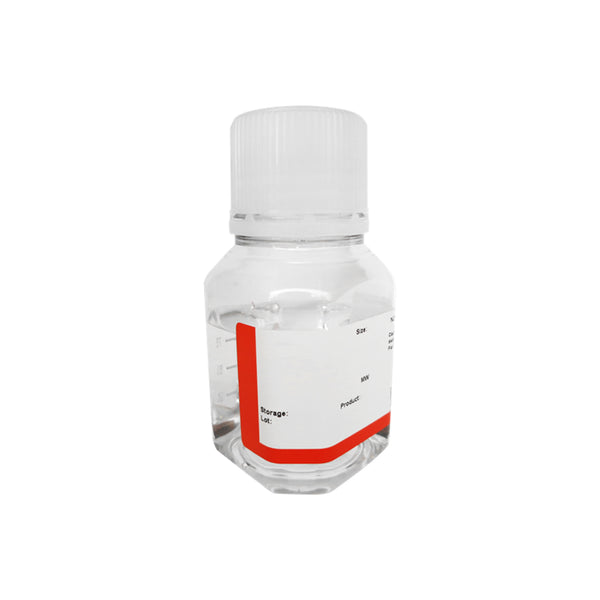
| Appearance | Clear blue liquid |
| Storage | 2–8°C |
| Intended Use | For laboratory research use only |
Bradford Reagent is intended for direct colorimetric determination of total protein concentration. The assay is suitable for research laboratories performing routine protein quantification from unknown samples using a BSA standard curve or a standard prepared from the protein of interest.
| Test Item | Specification |
|---|---|
| Appearance | Clear blue liquid |
| Absorbance at 595 nm | >1.80 |
| Characteristic Pattern | Pass |
| Peak A | 463–467 nm |
Lot-specific results should be confirmed using the Certificate of Analysis supplied for the applicable production lot.
Store the Bradford Reagent tightly closed at 2–8°C. Keep the product in its original packaging and allow it to warm to room temperature before opening and use.
The reagent contains an acidic Coomassie Brilliant Blue G-250 formulation. Wear suitable protective gloves and eye protection, avoid skin and eye contact, and handle the product according to the Safety Data Sheet and established laboratory safety procedures.
Bradford Reagent is used for direct colorimetric determination of total protein concentration. Unknown samples are measured against a protein standard curve, and absorbance is read at 595 nm.
The assay uses Coomassie Brilliant Blue G-250 dye. When the dye binds to protein, a dye-protein complex forms and produces an absorbance response that can be measured spectrophotometrically at 595 nm.
The product information documents a good linear relationship across a protein concentration range of 10–150 µg/mL. The supplied protocols prepare standards from 10–125 µg/mL.
The documented minimum detectable protein quantity is 0.2 µg in a sample volume of 1–20 µL.
Measure the absorbance of standards, blanks and unknown protein samples at 595 nm.
Yes. The supplied 96-well plate protocol uses 20 µL of standard or diluted protein sample and 200 µL of Bradford Reagent per well. After mixing for 30 seconds and incubating for 10 minutes at room temperature, absorbance is measured at 595 nm.
Yes. The test-tube protocol uses 100 µL of standard or diluted protein sample with 1 mL of Bradford Reagent. Samples are mixed, incubated for 10 minutes at room temperature and measured at 595 nm.
Incubate standards and unknown protein samples with the reagent for 10 minutes at room temperature before measuring absorbance.
Yes. Warm the reagent to room temperature and mix it thoroughly before beginning the protein assay.
The supplied protocol uses BSA standards. Because absorbance response can vary between proteins, the instructions also state that results may be more accurate when the protein of interest is used to prepare the standard curve.
The product instructions recommend using a BCA Protein Assay Kit when detergent is present in the sample. Detergent-containing samples should therefore be evaluated with the recommended alternative assay.
Yes. Duplicate measurements are recommended as good laboratory practice to reduce error. A new standard curve should be generated for each assay.
Subtract the average blank absorbance from the standards and unknown samples, plot the blank-corrected protein standard curve, determine the concentration of the diluted sample and then apply the recorded dilution factor to calculate the original protein concentration.
Store the reagent tightly closed at 2–8°C. Allow it to warm to room temperature before opening and use.
The product protocol, Certificate of Analysis and Safety Data Sheet are available in the Documents section of this product page.
For laboratory research use only. Not for human or animal drug use.
When can I expect my order to ship?
Most orders are filled and shipped within 2-3 business days from the time they are received.
Our standard shipping usually take 2-5 days.
We also provide express shippping for time-sensitive deliveries.
Email contact@biofargo.com if you have any requirements.