0 item(s)
View cart
You have no items in your shopping cart.
For laboratory research use only.
In biochemical research, analytical testing, and formulation development, researchers often need a reliable antioxidant or reducing reagent that dissolves easily in water, supports consistent sample preparation, and comes with clear quality documentation for purchasing and laboratory review. L-Ascorbic Acid, also known as Vitamin C, is widely used in research workflows where oxidation control, redox chemistry, and compound stability are important.
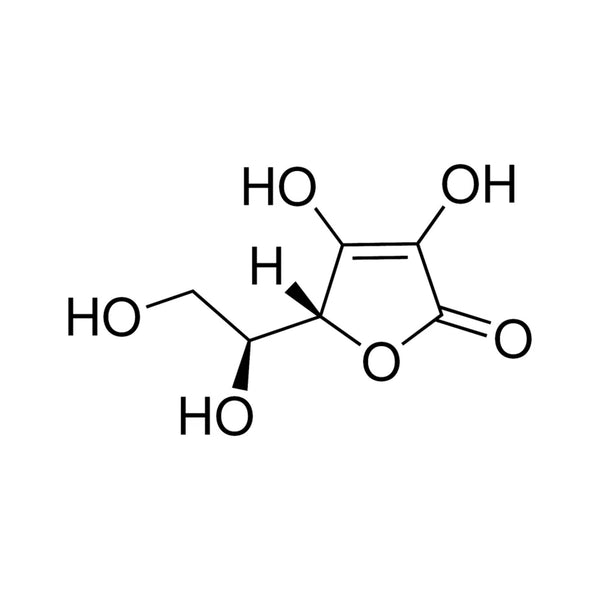
L-Ascorbic Acid Vitamin C, CAS 50-81-7, is supplied as a white crystalline powder meeting USP36 / BP2010 grade specifications. With a molecular formula of C6H8O6, molecular weight of 176.13, and assay specification of 99.0–100.5%, this product is suitable for laboratory research applications requiring a well-characterized ascorbic acid reagent.
As a water-soluble antioxidant and reducing agent, L-Ascorbic Acid is commonly used in biochemical assays, oxidation-reduction studies, cell culture research, analytical sample preparation, formulation research, and vitamin C analysis workflows. Product documentation, including COA, SDS, and product information, is available to support quality review, chemical handling, and procurement requirements.
Note: This product is intended for laboratory research and development use only. It is not intended for human or animal drug, diagnostic, therapeutic, food, household, or dietary supplement use.
| Product Name | L-Ascorbic Acid |
| Synonym | Vitamin C |
| Grade | USP36 / BP2010 |
| Product Code | AB0021 |
| CAS Number | 50-81-7 |
| Molecular Formula | C6H8O6 |
| Molecular Weight | 176.13 |
| Appearance | White Crystalline Powder |
| Identification | Positive reaction |
| Assay | 99.0–100.5% |
| Melting Point | About 190 °C |
| pH | 2.1–2.6 |
| Clarity of Solution | Clear |
| Colour of Solution | ≤BY7 |
| Copper | ≤5 ppm |
| Heavy Metals | ≤10 ppm |
| Iron | ≤2 ppm |
| Oxalic Acid | ≤0.3% |
| Sulphate Ash / Residue on Ignition | ≤0.1% |
| Specific Optical Rotation | +20.5° to +21.5° |
| Bacterial Endotoxins | ≤0.02 EU/mg |
| Storage | 18–25 °C |
USP36 / BP2010 grade L-Ascorbic Acid for laboratory research and development applications.
CAS 50-81-7 with clearly defined molecular formula C6H8O6 and molecular weight 176.13.
High assay specification of 99.0–100.5% for consistent use in research workflows.
White crystalline powder suitable for preparing aqueous ascorbic acid solutions.
Commonly used as a water-soluble antioxidant and reducing reagent in biochemical and analytical studies.
Includes defined limits for copper, iron, heavy metals, oxalic acid, residue on ignition, and bacterial endotoxins.
COA and SDS available to support quality review, safety handling, and procurement documentation.
Stored at 18–25 °C; protect from conditions that may accelerate oxidation or degradation.
L-Ascorbic Acid is selected in research laboratories where oxidation control, aqueous solubility, and documented chemical quality are important. Typical applications include:
Biochemical research: used as a water-soluble antioxidant in studies involving oxidative stress, redox balance, and reactive oxygen-related pathways.
Reducing reagent workflows: applied in oxidation-reduction experiments where a mild reducing compound is required.
Analytical sample preparation: used in research workflows where ascorbic acid helps limit oxidation during sample handling or preparation.
Vitamin C analysis: suitable for laboratory methods involving the preparation, comparison, or analysis of ascorbic acid-containing samples.
Cell culture research: used in research studies where antioxidant conditions or ascorbic acid supplementation are part of the experimental design.
Collagen and extracellular matrix research: used in studies related to collagen synthesis, hydroxylation reactions, and connective tissue biology.
Formulation research: used in experimental formulations where antioxidant behavior, solubility, or chemical stability is being evaluated.
Food and beverage analysis research: used in laboratory testing workflows involving vitamin C content, oxidation behavior, or sample stability.
Pharmaceutical research: applied in early-stage formulation, stability, and analytical development workflows requiring USP/BP grade ascorbic acid.
General laboratory reagent use: suitable for research laboratories requiring L-Ascorbic Acid powder with COA and SDS documentation.
L-Ascorbic Acid is sensitive to oxidation, especially in aqueous solution. Prepared solutions should be handled according to the needs of the experiment and protected from conditions that may accelerate degradation. Aqueous solutions are generally more stable under mildly acidic conditions and less stable under alkaline conditions. Transition metal ions such as copper and iron may accelerate degradation, so appropriate laboratory handling and storage practices are recommended.
Store the powder at 18–25 °C in a tightly closed container. Avoid unnecessary exposure to moisture, dust generation, and strong light. Review the Safety Data Sheet before handling.
L-Ascorbic Acid CAS 50-81-7 is commonly used as a water-soluble antioxidant and reducing reagent in biochemical research, analytical sample preparation, oxidation-reduction studies, formulation research, and vitamin C analysis workflows. It is also used in research studies related to collagen synthesis, hydroxylation reactions, and cell culture experimental design.
Yes. L-Ascorbic Acid is also known as Vitamin C. This product is supplied as a laboratory research reagent, not as a dietary supplement, food ingredient, drug, or therapeutic product.
This product meets USP36 / BP2010 grade specifications. It has an assay specification of 99.0–100.5% and is supplied as a white crystalline powder with defined limits for copper, iron, heavy metals, oxalic acid, residue on ignition, optical rotation, and bacterial endotoxins.
Yes. L-Ascorbic Acid is widely used as a water-soluble antioxidant reagent in research applications. It can help reduce oxidation in selected biochemical, analytical, and formulation workflows, depending on the experimental system and concentration used.
Yes. L-Ascorbic Acid is water soluble and can be used to prepare aqueous solutions for research use. Because ascorbic acid solutions can oxidize over time, especially under alkaline conditions or in the presence of transition metal ions, freshly prepared solutions and appropriate storage conditions are recommended for sensitive experiments.
Store the powder at 18–25 °C in a tightly closed container. Protect it from unnecessary exposure to moisture, strong light, and conditions that may promote oxidation. Always follow the SDS and your laboratory’s chemical handling procedures.
Yes. A Certificate of Analysis, Safety Data Sheet, and product information sheet are available to support quality review, safety handling, and purchasing documentation.
No. This product is intended for laboratory research and development use only. It is not intended for human or animal drug use, diagnostic use, therapeutic use, food use, household use, or dietary supplement use.