0 item(s)
View cart
You have no items in your shopping cart.
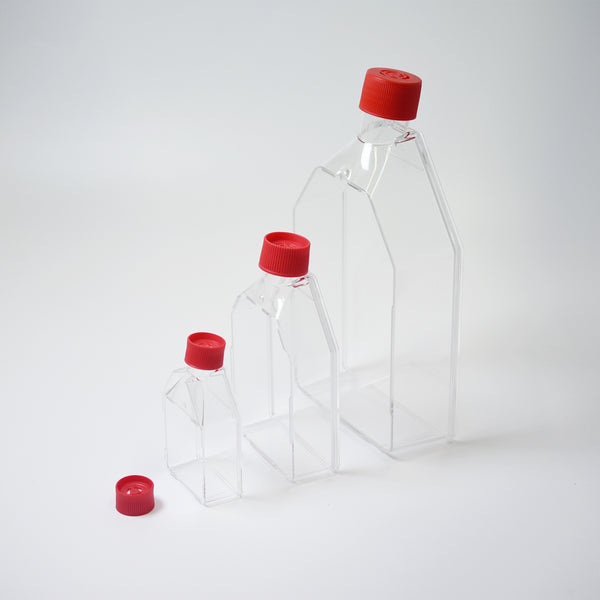
Biofargo cell culture flasks feature flat surfaces that offer a large culture area and promote growth. Vented caps with a 0.2 μm filter promote ventilation and prevent contamination. The angled neck provides fast and easy access. Meticulous manufacturing process guarantees reliability for your cell culture work. Each flask features two large noting areas that allow quick identification. Flasks are available in three different sizes: T25, T75, and T175.
| Colour | Flask: clear |
| Cap: Red | |
| Material | Flask: PS |
| Cap: HDPE | |
| Sterilization | Irradiation sterilization |
| Volume | Growth area: 75cm2 |
| Max. volume: 245mL | |
| Treatment | TC |
| Quality Control | Raw Material-Control: physical testing |
| Product-Control: testing of attributive and variable | |
| characteristics in accordance with the valid specification |
TC treated
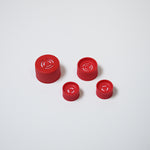
Vented caps with 0.2 μm filter, promoting ventilation and preventing contamination.
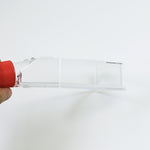
Angled bottle neck designed for pipettes and cell scrapers.
Measurements and annotation area on both sides.
Sterilized self-sealing bag to prevent contamination.
Easily stackable.
Gamma sterilized, DNase-free, RNase-free.
TC-Treated (Adherent Treatment):
Scenario: Suitable for the culture of adherent cells, providing excellent cell adhesion.
Effect: TC-treated cell culture flasks offer strong adhesion properties, making them ideal for long-term cell culture and large-scale cell expansion.
A T75 cell culture flask is designed for the growth, maintenance, and expansion of adherent mammalian cells. With a 75 cm² growth surface, it is commonly used for routine cell culture, cell line maintenance, transfection experiments, virus production, and preparation of cells for downstream assays.
TC-treated (Tissue Culture Treated) refers to a surface modification process that increases the hydrophilicity of the flask surface. This treatment improves cell attachment and spreading, making TC-treated flasks ideal for adherent cell lines such as HEK293, CHO, Vero, HeLa, and fibroblast cells.
A T75 flask provides a growth surface area of 75 cm² and a maximum volume of 245 mL. This size is commonly used for routine cell expansion and offers a balance between culture capacity and laboratory handling convenience.
Although the maximum volume is 245 mL, most cell culture protocols recommend using approximately 15–30 mL of culture medium in a T75 flask. The optimal volume depends on the cell type and specific experimental requirements.
A vented cap contains a 0.2 μm filter that allows sterile gas exchange while helping prevent contamination. Vented cap flasks are typically recommended for incubator-based mammalian cell culture. Sealed cap flasks are better suited for transport, storage, or applications where gas exchange is not required.
The 0.2 μm filter allows carbon dioxide and oxygen exchange while reducing the risk of microbial contamination. Proper gas exchange helps maintain stable culture conditions and supports healthy cell growth in CO₂ incubators.
Yes. The TC-treated surface is suitable for a wide range of adherent mammalian cell lines, including HEK293, CHO, Vero, HeLa, MDCK, fibroblasts, stem cells, and many other attachment-dependent cell cultures.
Yes. Biofargo T75 Cell Culture Flasks are individually packaged and sterilized by irradiation. The flasks are supplied ready to use and are suitable for aseptic cell culture applications.
Yes. Biofargo T75 flasks are manufactured under strict quality control procedures and are supplied DNase-free and RNase-free, helping protect sensitive cell culture and molecular biology workflows.
The flask body is made from high-clarity polystyrene (PS), providing excellent visibility for microscopic observation and routine monitoring of cell morphology and confluency.
Yes. The flask design allows stable stacking, helping optimize incubator space while maintaining convenient handling during routine cell culture operations.
T75 tissue culture flasks are widely used for adherent cell culture, cell expansion, transfection studies, recombinant protein expression, virus propagation, vaccine research, stem cell culture, toxicity testing, and general life science research.
When can I expect my order to ship?
Most orders are filled and shipped within 2-3 business days from the time they are received.
Our standard shipping usually take 2-5 days.
We also provide express shippping for time-sensitive deliveries.
Email contact@biofargo.com if you have any requirements.